THE SOOTHSAYER by MOUNA REBEIZ
Curated by Roberta Semeraro
Rome, Museo Nazionale Etrusco di Villa Giulia
16 September – 29 November 2026
PRESS RELEASE
The Museo Nazionale Etrusco di Villa Giulia in Rome and the RO.SA.M. Cultural Association present The Soothsayer by Mouna Rebeiz, an exhibition dedicated to the Tarot, curated by art critic Roberta Semeraro, open to the public from 16 September to 29 November 2026 at the Museo Nazionale Etrusco di Villa Giulia. Lebanese-born artist Mouna Rebeiz previously presented The Soothsayer in Venice in 2022, during the 59th International Art Exhibition – La Biennale di Venezia, at the Pavilion of the Republic of San Marino. The installation has now been reimagined as a site-specific project for the magnificent Renaissance setting of Villa Giulia.
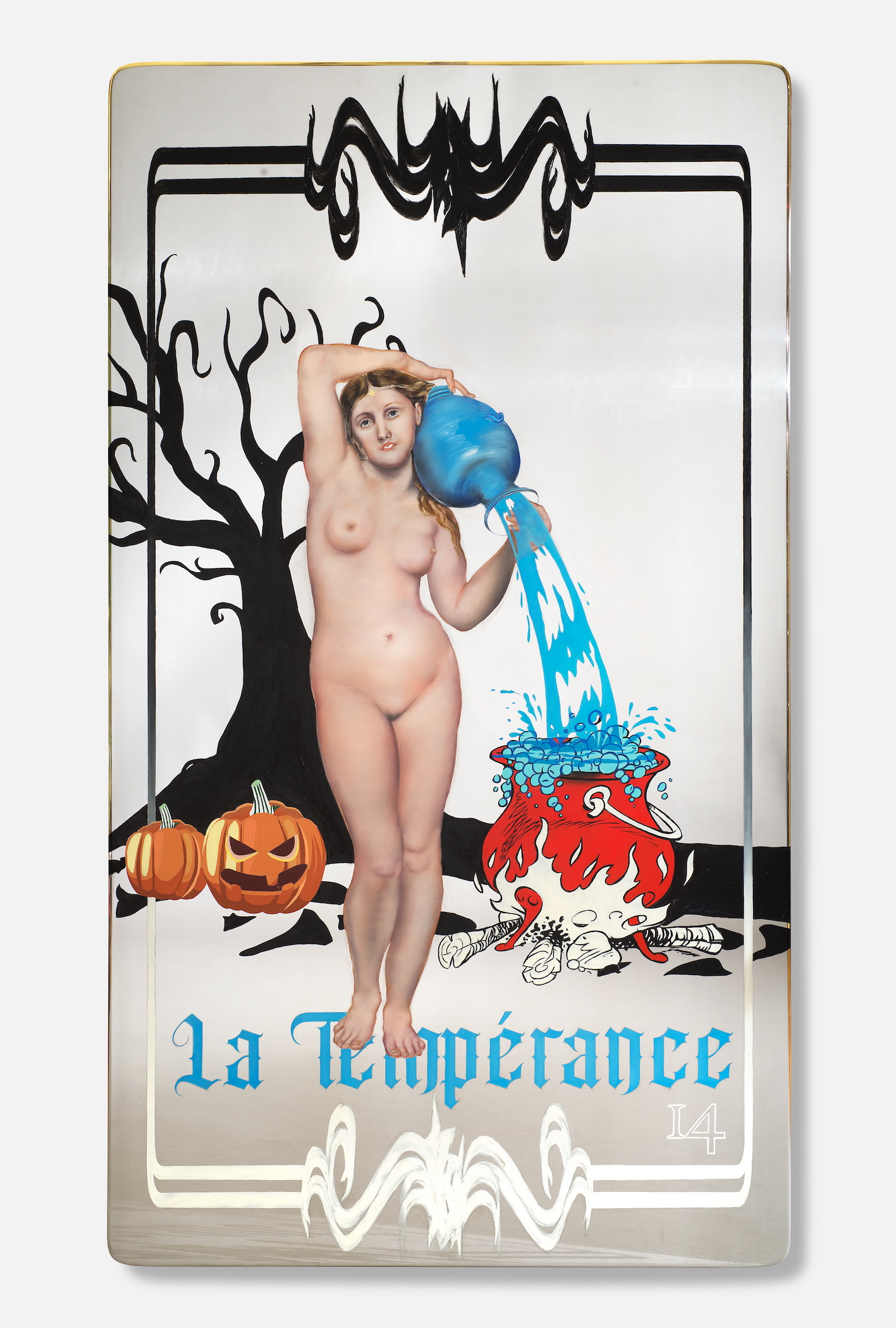
Conceived at the intersection of the globalisation of Artificial Intelligence and symbolic traditions, the installation consists of twenty-two cards representing the Major Arcana. Created on large mirrored surfaces that interact directly with visitors, the Tarot cards suggest a journey towards a deeper knowledge of the self.
The Soothsayer draws inspiration from Shakespeare’s Julius Caesar, in which the Etruscan haruspex Spurinna warns Caesar not to go to the Senate on 15 March, foretelling his death if he does. Ignoring the soothsayer’s revelation, Caesar is killed in the most famous conspiracy in Roman history.
It was precisely this connection with the Etruscan tradition of divination that inspired curator Roberta Semeraro to bring the project to Rome and install it within the Museo Nazionale Etrusco di Villa Giulia. Divination occupied a central role in Etruscan culture, and the Museum still preserves important evidence and artefacts relating to the practices of haruspices and soothsayers.
“Mouna Rebeiz’s works transcend time by engaging with a universal theme that has accompanied humanity since its origins: the relationship with the divine and the destiny of each individual,” says Luana Toniolo, Director of the Museum. “Like the ancient signs entrusted by the Etruscans to ritual, art and the interpretation of the invisible world, the Arcana evoked by the artist open up a space for contemplation in which past and present are reflected in one another. The work invites viewers to embark on a journey in which every symbol, yesterday as today, offers no definitive answers, but instead gives rise to questions that resonate across time.”
The dialogue between Mouna Rebeiz’s contemporary work and the Museum’s archaeological heritage takes on even greater significance in light of the historic acquisition by the Italian State of the François Tomb of Vulci, one of the most extraordinary masterpieces of Etruscan painting. The celebrated frescoes of the tomb include figures associated with prophecy and divination, such as Amphiaraus and Cassandra, together with references to the practice of ornithomancy, bearing witness to the central role that the sacred and the prediction of fate played in the ancient world.
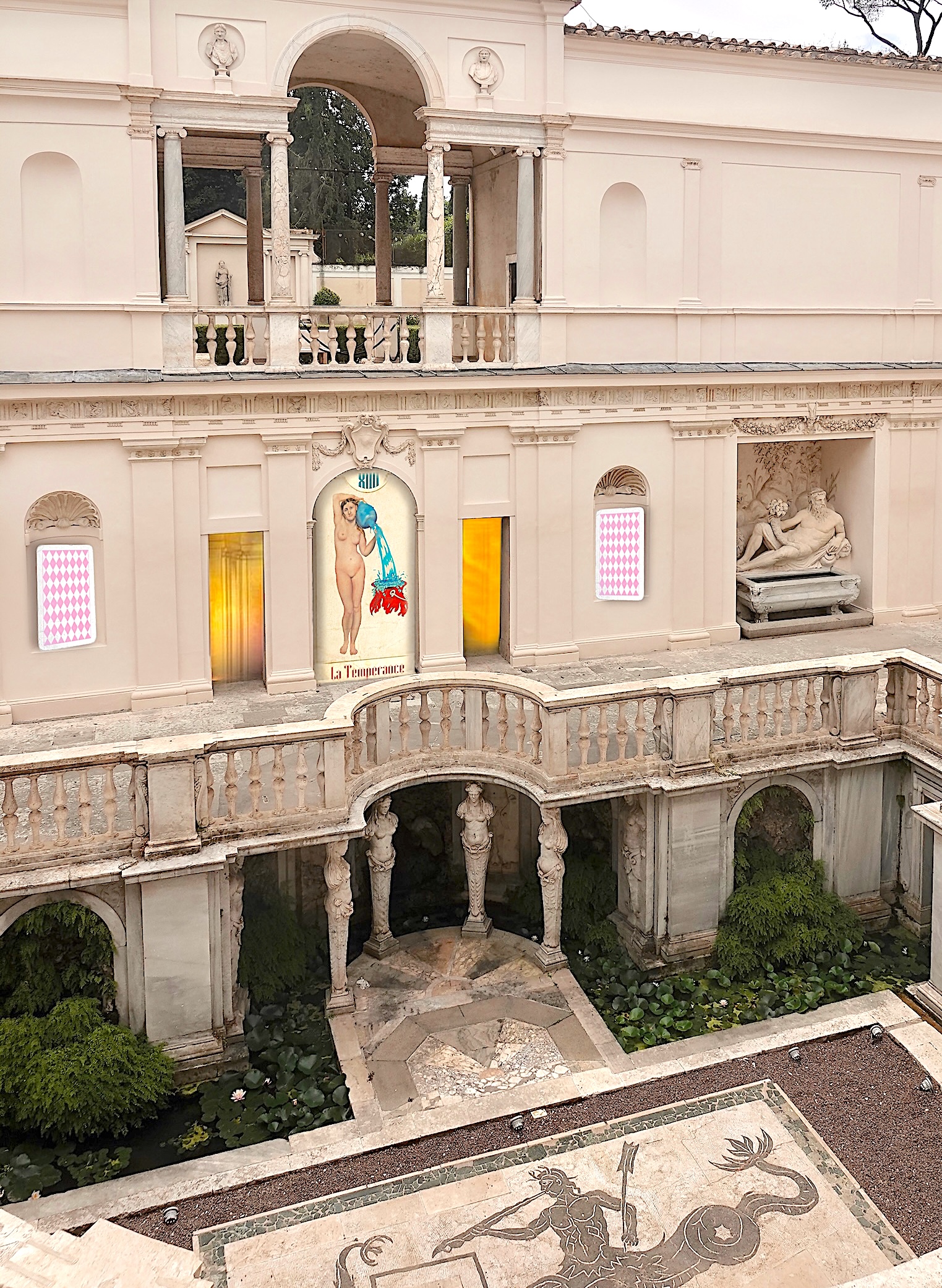
Centred on the human mind’s capacity to explore what lies beyond the control of reason and the algorithms through which Artificial Intelligence operates, the installation will be displayed in the Museum’s semicircular gallery, in dialogue with archaeological artefacts bearing witness to the ancient Etruscan knowledge to which Spurinna belonged. Through the Fourteenth Major Arcana, The Soothsayer will reveal its prophecy to visitors in the evocative Nymphaeum built above the ancient Roman aqueduct. Temperance, represented by a woman pouring water from one vessel into another, will offer visitors a unique and unrepeatable experience of painting and music inspired by Vangelis’s Mythodea, to which Rebeiz has dedicated a painting more than sixteen metres high.
Mythodea was composed by the great Greek musician to commemorate NASA’s exploration of Mars, the only planet where the presence of water suggests that some form of life may once have existed and which could, in the future, provide a refuge for humankind.
Reinforcing these concepts within the exhibition is the involvement of the Acea Group, which, through Areti, manages an invisible electricity network beneath Rome, collecting vast amounts of data to predict peaks in consumption, prevent blackouts linked to heatwaves and thus help move the capital towards the ecological transition.
The technical design of the exhibition is entrusted to Studio Palinsesto in London, led by Simonpietro Salini and Federico Lippi, while the Mythodea installation will be directed by AV Set Produzioni SpA.
The exhibition will also have its own virtual dimension through the Instagram profile @lindovino.exhibition, which is already online. The channel will not merely preview the exhibition’s content but, from the opening day onwards, will allow users to interact with Mouna Rebeiz’s Tarot cards. Curator Roberta Semeraro intends to observe, through followers’ interactions, how Artificial Intelligence, programmed according to algorithmic logic, engages with a form of knowledge based on chance. Each month, a report on followers’ interactions with the account will be produced, and the results will be shared with visitors during the exhibition, offering a point of reflection on the influence of Artificial Intelligence on individual decision-making processes and on the role of algorithmic bias in shaping choices.
Also on view in Venice until 8 November 2026 is the artist’s solo exhibition Le tarbouche. When an Accessory Becomes a Symbol, featuring works by Mouna Rebeiz, curated by Roberta Semeraro and organised by the Fondazione Musei Civici di Venezia at the Museo di Palazzo Mocenigo – Centre for the Study of Textiles, Costume and Perfume.
The exhibition is held under the patronage of the Embassy of Lebanon, with the support of Redbridge Insurance Company Ltd., UFA Assurance and Risk Management, the technical sponsorship of Areti, and Dimensione Suono Soft as media partner.
USEFUL INFORMATION
Information
Tel. +39 06 3226571 | museoetru.it
Opening Hours
Tuesday–Sunday: 8:30 am–7:30 pm (galleries close at 7:00 pm – last admission at 6:30 pm)
Admission
Full price €13. Reduced €2